Train Your Own Assistance Dog
A guided pathway for people who want to train their own Assistance Dog…
and do it right.
Structured training. Clear standards. Professional oversight.
Progress is assessed, not assumed, with the potential to work toward GHAD certification when the required standards are met. This is not a shortcut. It is a responsible process designed to protect both handler and dog.
The first step is a conversation.
15-minute Zoom with Angie Weeks.
Discuss your situation and your dog.
$27 to book. No obligation.
Train Your Own Assistance Dog
A guided pathway for people who want to train their own Assistance Dog… and do it right.
Structured training. Clear standards. Professional oversight.
Progress is assessed, not assumed, with the potential to work toward GHAD certification when the required standards are met. This is not a shortcut. It is a responsible process designed to protect both handler and dog.
The first step is a conversation.
15-minute Zoom with Angie Weeks.
Discuss your situation and your dog.
$27 to book. No obligation.
Watch How the Train Your Own Pathway Works
Angie Weeks explains the structure, standards, expectations and pathway toward GHAD certification.
Watch How the Train Your Own Pathway Works
Angie Weeks explains the structure, standards, expectations and pathway toward GHAD certification.
What This Is...
The Train Your Own Assistance Dog programme is a guided pathway for people who want to train their own dog for Assistance Dog work, with professional oversight and clear standards.
It is not a do-it-yourself course, and it is not a guarantee of certification.
Instead, it provides structure, support, and assessment over time, so both the handler and the dog can be evaluated honestly and responsibly.
Some people come into the programme with a dog they already have.
Some want help with finding a dog.
Whilst others are still working out whether their dog, or even their timing, is right.
That’s part of the process.
Training focuses on foundational skills, real-world behaviour, and the development of personalised assistance tasks where appropriate. Progress is assessed throughout, rather
than assumed.
The programme is delivered through a defined training pathway, which is explained in more detail further on this page and during the Preliminary Chat.
What This Is...
The Train Your Own Assistance Dog programme is a guided pathway for people who want to train their own dog for Assistance Dog work, with professional oversight and clear standards.
It is not a do-it-yourself course, and it is not a guarantee of certification.
Instead, it provides structure, support, and assessment over time, so both the handler and the dog can be evaluated honestly and responsibly.
Some people come into the programme with a dog they already have.
Some want help with finding a dog.
Whilst others are still working out whether their dog, or even their timing, is right.
That’s part of the process.
Training focuses on foundational skills, real-world behaviour, and the development of personalised assistance tasks where appropriate. Progress is assessed throughout, rather than assumed.
The programme is delivered through a defined training pathway, which is explained in more detail further on this page and during the Preliminary Chat.
What This Can Support...
For the right person, and with the right dog, an Assistance Dog can provide practical, day-to-day support that helps create greater stability and
predictability in life.
That support might look like help with grounding during moments of distress, assistance navigating public environments, or increased confidence in routines that currently feel overwhelming.
What matters is that these outcomes are not assumed or promised.
They are developed over time through consistent training, ongoing assessment, and the relationship between the handler and the dog.
This programme is designed to support that process carefully, without rushing to outcomes or overstating what an Assistance Dog can provide.
The focus remains on what is appropriate, sustainable, and genuinely supportive
for the individual.
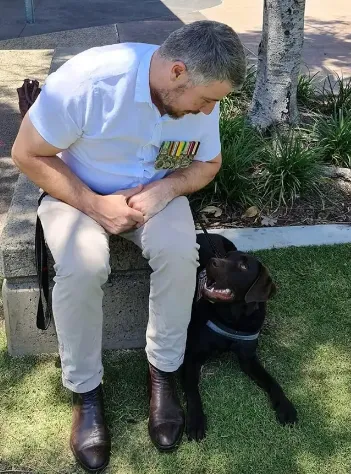
What This Can Support...
For the right person, and with the right dog, an Assistance Dog can provide practical, day-to-day support that helps create greater stability and predictability in life.
That support might look like help with grounding during moments of distress, assistance navigating public environments, or increased confidence in routines that currently feel overwhelming.
What matters is that these outcomes are not assumed or promised.
They are developed over time through consistent training, ongoing assessment, and the relationship between the handler and the dog.
This programme is designed to support that process carefully, without rushing to outcomes or overstating what an Assistance Dog can provide.
The focus remains on what is appropriate, sustainable, and genuinely supportive for the individual.
How an Assistance Dog Fits Within Broader Support
An Assistance Dog is not a treatment, and it is not a replacement for clinical
or therapeutic support.
For some people, an Assistance Dog may form part of a broader support framework, alongside existing care, routines,
and strategies.
This programme is focused specifically on whether training an Assistance Dog is appropriate, and how that process can be approached responsibly when it is.
Decisions about treatment and care should always be made with
qualified professionals.
And... we are fun & cuddly
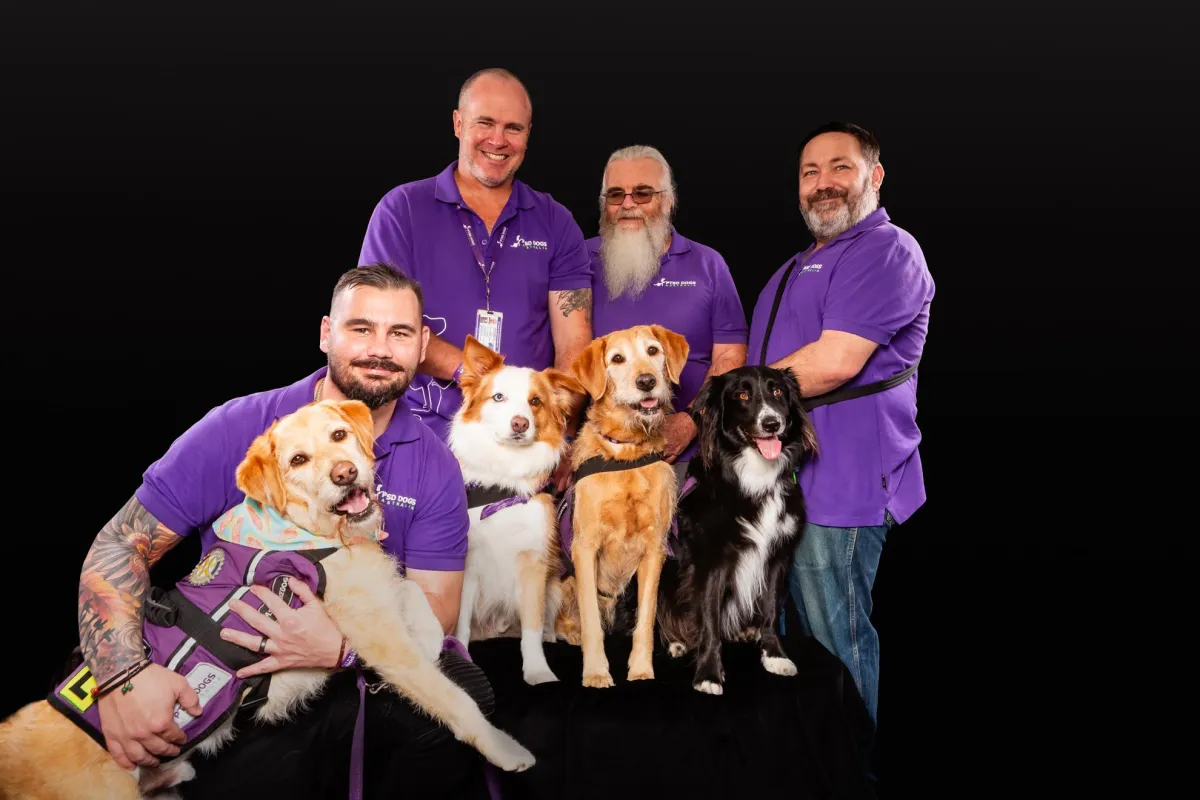
How an Assistance Dog Fits Within Broader Support
An Assistance Dog is not a treatment, and it is not a replacement for clinical or therapeutic support.
For some people, an Assistance Dog may form part of a broader support framework, alongside existing care, routines, and strategies.
This programme is focused specifically on whether training an Assistance Dog is appropriate, and how that process can be approached responsibly when it is.
Decisions about treatment and care should always be made with qualified professionals.
And... we are fun & cuddly
What MakesThis Different
This programme has been designed to balance compassion with structure, and support with accountability.
It is guided by experienced trainers who understand both Assistance Dog standards and the responsibility that comes with training a working dog.
Training is practical and grounded in real-world environments, rather than limited to theory or ideal conditions.
Progress is assessed over time, allowing suitability and readiness to be evaluated honestly rather than assumed.
The pathway is designed to support teams working toward recognised standards, including GHAD certification when ready, without compromising the wellbeing of the dog or the handler.
This approach prioritises long-term outcomes over speed or shortcuts.
Professional guidance
The content and instructional videos are all created and demostrated by Angie Weeks and Jan Honeyman.
Real-world training focus
Take your training out of your house with your furry friend with Cue Cards
and Worksheets
Ongoing assessment & support
The course will indicate timelines for progress, you will submit your Training Logs, and be Assessed at the end of each module
What MakesThis Different
This programme has been designed to balance compassion with structure, and support with accountability.
It is guided by experienced trainers who understand both Assistance Dog standards and the responsibility that comes with training a working dog.
Training is practical and grounded in real-world environments, rather than limited to theory or ideal conditions.
Progress is assessed over time, allowing suitability and readiness to be evaluated honestly rather than assumed.
The pathway is designed to support teams working toward recognised standards, including GHAD certification when ready, without compromising the wellbeing of the dog or the handler.
This approach prioritises long-term outcomes over speed or shortcuts.
Professional guidance
The content and instructional videos are all created and demostrated by Angie Weeks and Jan Honeyman.
Real-world training focus
Take your training out of your house with your furry friend with Cue Cards and Worksheets
Ongoing assessment & support
The course will indicate timelines for progress, you will submit your Training Logs, and be Assessed at the end of each module
Let’s Find Out If This Is
the Right Path
Before any decisions are made, the next step is a conversation.
The Preliminary Chat is a 15-minute Zoom session with Angie Weeks, designed to talk through your specific situation, your needs, and where you are currently at.
This is not a sales call.
It’s an opportunity to ask questions, understand how the Train Your Own pathway works in practice, and explore whether training an Assistance Dog is appropriate for you and your dog.
During the conversation, suitability is discussed openly and honestly. In some cases, the outcome is a clear next step. In others, it may be a pause, a different pathway, or more time to consider
what’s right.
And that’s okay.
The goal of the Preliminary Chat is clarity, not commitment.
There is a small cost of $27 to book the session. This helps ensure the conversation is intentional and respectful of everyone’s time.
Let’s Find Out If This Is the Right Path
Before any decisions are made, the next step is a conversation.
The Preliminary Chat is a 15-minute Zoom session with Angie Weeks, designed to talk through your specific situation, your needs, and where you are currently at.
This is not a sales call.
It’s an opportunity to ask questions, understand how the Train Your Own pathway works in practice, and explore whether training an Assistance Dog is appropriate for you and your dog.
During the conversation, suitability is discussed openly and honestly. In some cases, the outcome is a clear next step. In others, it may be a pause, a different pathway, or more time to consider what’s right.
And that’s okay.
The goal of the Preliminary Chat is clarity, not commitment.
There is a small cost of $27 to book the session. This helps ensure the conversation is intentional and respectful of everyone’s time.
OUR TEAM
Our Awesome Trainers
The Train Your Own Assistance Dog programme is supported by a team of experienced trainers who understand both Assistance Dog standards and the responsibility that comes with this work.Each trainer brings practical, real-world experience, working with people and dogs across a range of needs, environments, and stages of readiness.
Their role within the programme is not to rush outcomes or force progress, but to provide guidance, oversight, and honest feedback as teams move through the pathway.This ensures decisions are made in the best interests of both the handler and the dog, and that training remains ethical, consistent, and standards-led.You are not relying on a single opinion or approach.
You are supported by a team committed to doing this work properly.
OUR TEAM
Our Awesome Trainers
The Train Your Own Assistance Dog programme is supported by a team of experienced trainers who understand both Assistance Dog standards and the responsibility that comes with this work.Each trainer brings practical, real-world experience, working with people and dogs across a range of needs, environments, and stages of readiness.
Their role within the programme is not to rush outcomes or force progress, but to provide guidance, oversight, and honest feedback as teams move through the pathway.This ensures decisions are made in the best interests of both the handler and the dog, and that training remains ethical, consistent, and standards-led.You are not relying on a single opinion or approach.
You are supported by a team committed to doing this work properly.
Experiences From People Who’ve Taken the
First Step
People come into the Train Your Own pathway from very different starting points, with different needs, questions, and levels of certainty.
These short videos share reflections from people who chose to begin the conversation and explore whether this pathway was right for them.
Their experiences are personal, and outcomes vary. What they have in common is a willingness to engage with the process honestly and take the first step when it felt appropriate.
We encourage you to listen, reflect, and consider whether this approach feels aligned for you.
Experiences From People Who’ve Taken the First Step
People come into the Train Your Own pathway from very different starting points, with different needs, questions, and levels of certainty.
These short videos share reflections from people who chose to begin the conversation and explore whether this pathway was right for them.
Their experiences are personal, and outcomes vary. What they have in common is a willingness to engage with the process honestly and take the first step when it felt appropriate.
We encourage you to listen, reflect, and consider whether this approach feels aligned for you.
Frequently Asked Questions
What if I don’t have a diagnosis of PTSD but have agoraphobia, anxiety or depression. Will this help and can I still do the program?
Yes, your dog in the later modules of modules 4-7 will be taught specific tasks to mitigate your personal disability to meet your medical goals.
I have physical problems as well, does this preclude me?
No providing you can train your own dog or have suitable people who can support and potentially be a secondary handler. In modules 4-7, your dog will be taught specific tasks to mitigate your physical challenges.
My dog is outside the desired weight or height, can I still do the program?
Height for the lower end is for physical tasks and is generally at 50cm. The upper end of height is for public transport and is generally 60cm. Due to your specific needs this will be assessed. Eg Balance weight bearing assistance work.
My dog is the family pet. Can I train my dog in this situation?
Yes your dog could potentially be trained, however an Assistance Dog is trained to mitigate an individuals disability and as such is trained for one person and is not a family pet.
My dog is entire and I don’t want to desex it, can it still be part of the program?
Assistance dogs are to be desexed once they are ready to complete a PAT assessment under GHAD Legislation which is how your dog will be certified.
My dog is deaf, can I still have it as my assistance dog?
No, as the dog must have a clear bill of health passed by a veterinarian.
I have been with another organisation, can I change to PTSD Dogs Australia?
Yes, providing the dog meets the behavioural standards set by the organisation.
What sort of health and physical ability does my dog need to be at?
A dog's health and physical ability to perform specific tasks may impact its suitability to become an assistance dog. For example, a dog with certain medical conditions or physical limitations may not be able to fulfill the necessary duties.
Is there a minimum or maximum age for a suitable dog to train?
The age and developmental stage of a dog can also be a factor. Younger dogs may need to demonstrate a certain level of maturity and training before they can be considered for assistance work. Depending on the size / breed of dog, the upper age can vary.
How frequently do I need socialise and train my dog?
Insufficient socialisation or training may also preclude a dog from becoming an assistance dog. Dogs must be well-socialised and have the ability to remain calm and focused in various environments and situations.
How do you judge behavioral suitability of a dog for this program?
Dogs must exhibit the right temperament and behavior to work as assistance animals. Aggression, excessive fearfulness, or inability to focus on tasks may disqualify a dog from becoming an assistance dog.
What attributes do you look for in an assistance dog?
They need to be cool, calm and collected around people, children and other dogs. They need to born pacifists, with zero aggressive tendancies and display a quiet confidence.